


|
|
|||
 |
|||
| Log In | |||
|
|||
|
|||
|
| |||
|
|||
| |||
|
|||
| |||



1. High-Frequency Electric Motor Whine Electric motors routinely spin at 15,000 RPM or higher, far beyond the rotational speeds technicians are used to interpreting through traditional techniques. At these speeds, mechanical vibration shifts into high-frequency zones that are difficult to feel and easy to misdiagnose without the right equipment. 2. The Loss of the “Acoustic Blanket” Think of a traditional engine as a loudspeaker that drowns out minor vehicle noises. Without that constant engine hum, an EV cabin is more like a soundproof booth. Suddenly, minor annoyances that used to go unnoticed, like a clicking door actuator, a humming coolant pump or just normal tire noise on the road, become the loudest things the customer hears, leading to complaints about noises that would have been completely buried on a gasoline or diesel vehicle. Data Vs Guesswork: Are You Fixing the Vehicle, or Just Throwing Parts at It? When a NVH issue can’t be pinned down by ear or feel, the temptation is to start swapping parts and hope one of them fixes it. It’s slow, expensive and it doesn’t always work, especially when the fault is present at a frequency that is difficult to discern. |
|||||||||||||||||||||||||||||||||||||

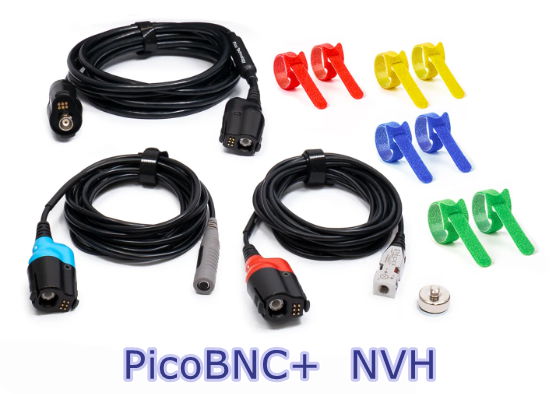
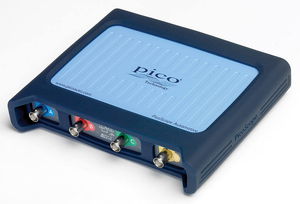
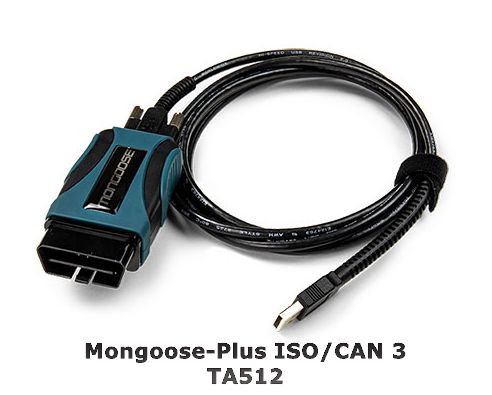

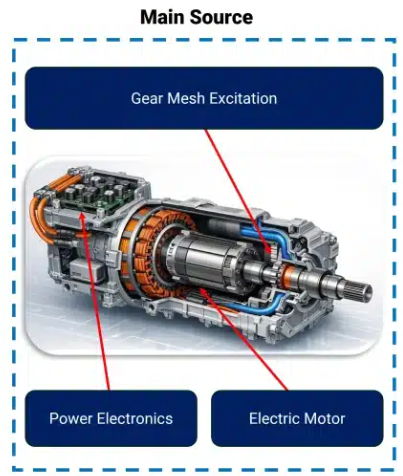
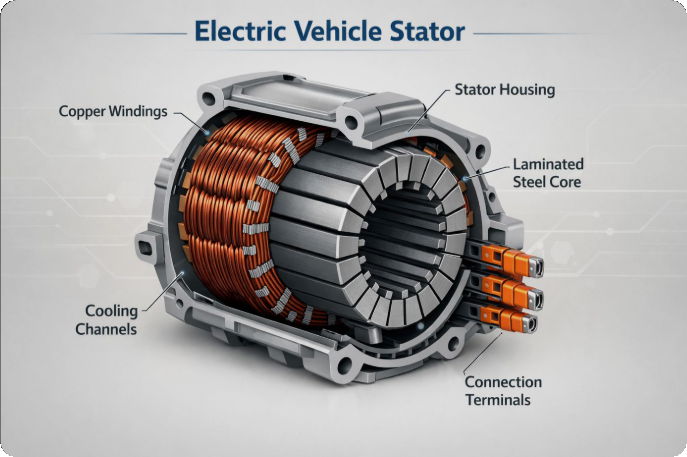
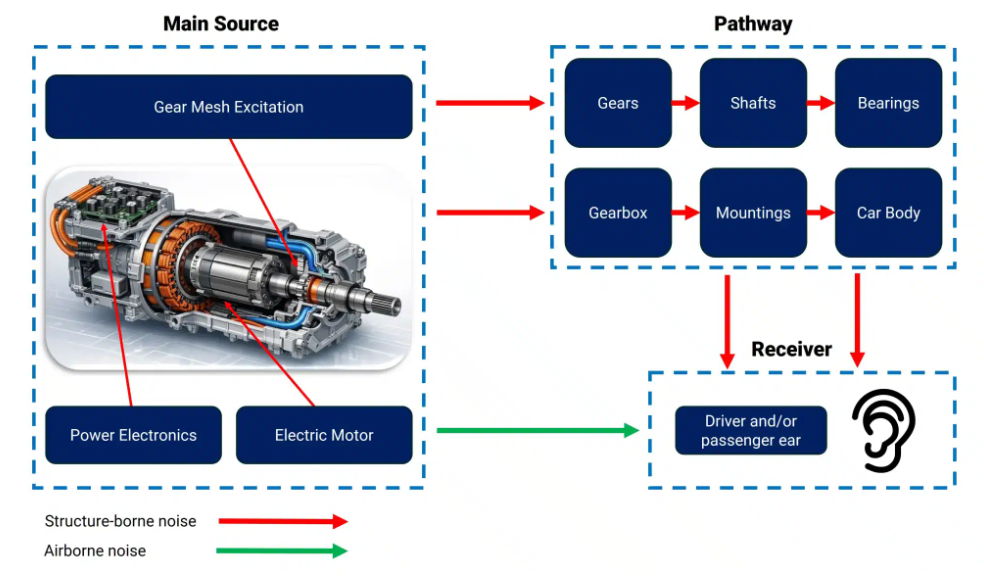
| Traditional Testing | Modern EV NVH Testing |
| Listening by ear or feeling by touch | Accurate accelerometer & microphone, robust, and easy-to-use transducers (captures e-motor & inverter harmonics) at multiple measurement locations |
| Guessing and test driving | Measuring exact noise and vibration frequencies and amplitudes to gain repeatable, verifiable data |
| Relying on human perception | Real-time frequency-to-vibration-order mapping using available motor RPM and road speed signals to isolate the source |
| Swapping expensive parts blindly | Software-guided, right-first-time diagnosis |
| Repeat workshop visits | Evidence-based fixes that preserve the EV’s signature quiet ride |
3 Reasons Every EV Technician Needs a PicoBNC+ NVH Diagnostic Kit
NVH diagnostics on EVs isn’t just about detecting a problem – it’s about proving it, fixing it right the first time, and doing so without adding steps to an already busy workshop day.
1. Stop Chasing “Ghost” Noises
PicoDiagnostics NVH software instantly links raw vibration signals directly to vehicle, electric motor or other rotating component speeds, using vibration order analysis to mathematically pinpoint a noise source instead of leaving it to guesswork.
2. Battery-Free, Plug-and-Play Setup
PicoBNC+ sensors are powered directly by the PicoScope oscilloscope, so there’s no external interface battery to charge or configure mid-road test – just connect and go.
3. Turn Subjective Complaints into Bulletproof Customer Reports
Clear, data views and reports protect the workshop against warranty disputes and proves the “right-first-time” fix, even to the most skeptical vehicle owner.
Is Your Diagnostic Bay Ready for Next-Generation Vehicles?
Mechanical faults haven’t disappeared as vehicles have been electrified – they’ve just been joined by new sources at different frequencies. As EV adoption accelerates, the workshops that can measure and prove NVH faults, rather than guess at them, will be the ones customers trust with the next generation of vehicles.
Learn how the PicoBNC+ NVH Diagnostics Kit interfaces seamlessly with your PicoScope 4225A or 4425A.
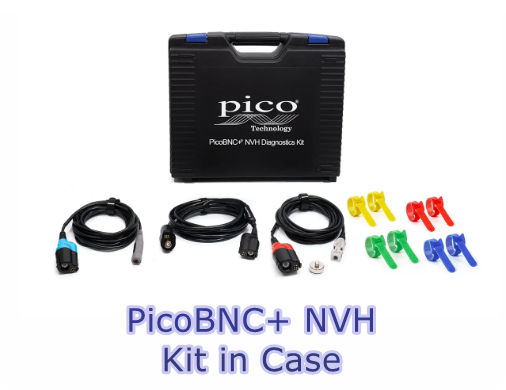 Pico BNC NVH Kit |
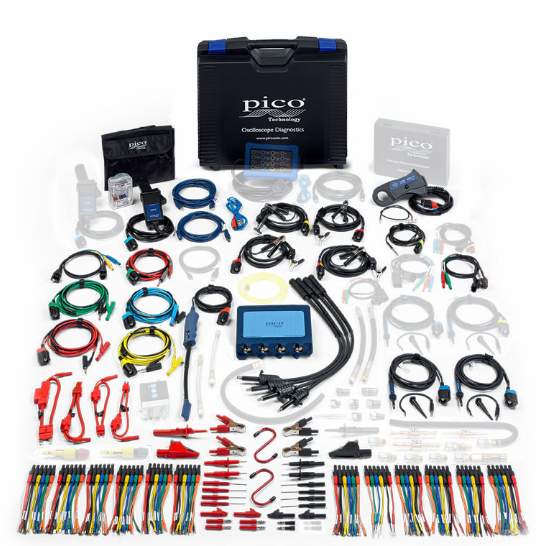 Pico Automotive Oscilloscopes |
Frequently Asked Questions
Q: Do I need a specific PicoScope to use the PicoBNC+ NVH Diagnostic Kit for EV testing?
A: To take full advantage of the plug-and-play automatic probe recognition, the kit is designed to work with the PicoScope 4225A and 4425A automotive oscilloscopes. The PicoBNC+ interface powers the sensors directly from the scope, eliminating the need for internal probe batteries during a road test.
Q: Can the kit detect high-frequency electric motor whines and inverter harmonics?
A: Yes. Electric motors routinely exceed 15,000 RPM, generating micro-vibrations and high-frequency noises that are difficult to feel or isolate by ear. The precision accelerometers and microphones capture these precise frequencies, allowing the software to map them directly to motor order speeds or inverter harmonics.
Q: How does this help resolve customer complaints about minor cabin noises?
A: Because electric drivetrains lack combustion engine noise, minor cabin rattles, coolant pump hums, or road noise become more noticeable. Instead of guessing or blindly swapping parts, the PicoDiagnostics NVH software generates visual 3D frequency reports. This provides objective data to prove the exact source of the fault to vehicle owners and warranty providers.
 |
 |
|||
|
|
|
 |